Pressure Without Preparation
When pressure arrives before preparation—and no one knows how to hold it.
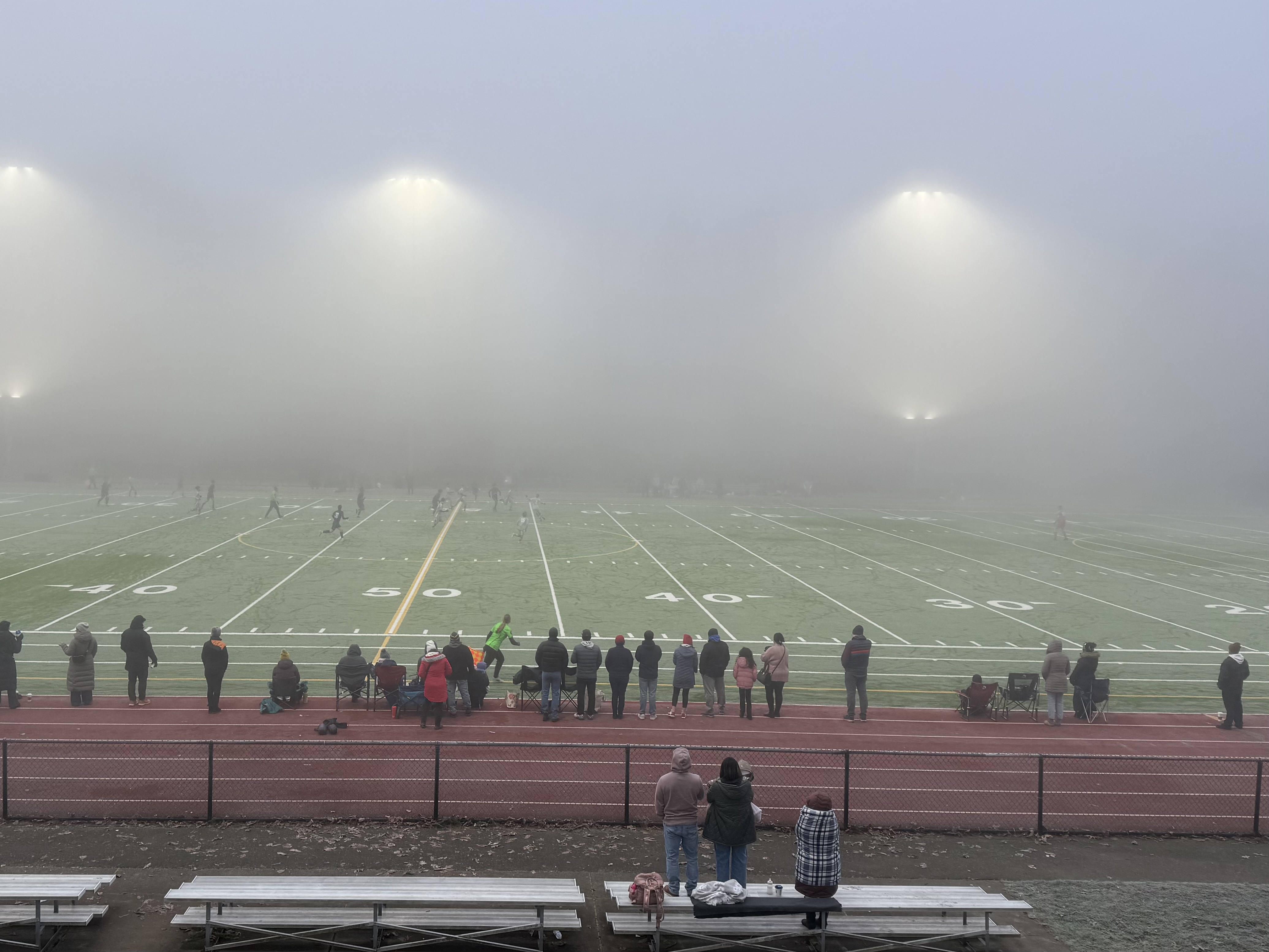
This post was originally published for Optima Mindset Coaching's blog, Mindset Matters. You can see more posts like it or find out more about Optima, HERE. I spent this past weekend with my boys and some close friends at a college showcase soccer tournament in Seattle.
The game before my youngest son’s ended in a draw and went to a penalty kick shootout to determine a winner. As I leaned against the fence, talking with a good friend, I remarked on how cool it was that those girls had the chance to experience a moment like that.
He quickly replied that he wouldn’t want to be the one taking the kick.
When I asked why, the answers came easily.
Afraid to miss, to let the team down, of not being good enough.
He wasn’t wrong. Those fears are real. They’re also familiar.
What struck me wasn’t the pressure of the moment itself, but how quickly adult-level meaning attaches to it. How does a single kick feel like a verdict rather than an opportunity. How easily performance, identity, and worth become tangled together.
And that tension followed me for the rest of the weekend.
Because moments like these are becoming more common, earlier and earlier. We’re placing children into environments that demand emotional regulation, perspective, and self-identity they haven’t yet had the time—or support—to develop. Some of these same kids are still leaving cookies and milk out for Santa Claus.
And then we’re surprised when they crack.
What’s more troubling is that the institutions meant to protect healthy development often say the right things publicly, while quietly normalizing environments that contradict those values.
We talk about long-term development, growth over results.
And then we create moments where outcomes matter deeply, early, and publicly.
Take events like national identification programs where children as young as 11 travel across the country to compete for status, selection, and validation, while those same systems claim results shouldn’t matter until much later.
That contradiction isn’t neutral.
When performance expectations outpace emotional skill development, confidence becomes conditional, resilience turns brittle, and pressure stops being a tool for growth and becomes a weight kids carry alone.
If we truly want to raise emotionally resilient children, we can’t just demand toughness. We have to intentionally teach the skills that make pressure survivable—and eventually useful.
The Pressure Paradox
Pressure, on its own, isn’t inherently harmful. In the right context, it can be useful. But when the level of pressure exceeds the emotional capacity of a child’s developmental stage, it quickly becomes a breeding ground for self-doubt and anxiety—and a reliable crusher of confidence.
Confidence doesn’t come first. Competence does. And until a child has had the time and space to build real competence, any confidence they show is resting on a shaky foundation.
The problem is, competence can’t develop in environments where results are the sole measure of success and failure is treated as a verdict on value, rather than an opportunity to learn. When outcomes matter more than growth, the very experiences that build confidence are the first things to disappear.
The reality is, pressure is entering kids’ lives earlier than ever. Competitive structures, rankings, and high-stakes moments now show up at ages where emotional regulation and perspective are still very much under construction.
As parents and adults, we don’t always get to control everything about the environment our children step into. We can, and should, seek out developmentally appropriate settings and push back when systems demand too much, too soon. But even when pressure can’t be avoided, there are skills we can intentionally help our kids develop that make those moments survivable—and eventually useful.
If we want them to use pressure as a catalyst for growth, we have to give them the framework to hold it up.
When stress becomes overwhelming, the brain goes into survival mode, and shifts from learning to self preservation.
Simply telling a kid to stay calm does nothing to help them develop the resilience needed to see pressure moments as opportunity regardless of outcome rather than a threat to their self worth. We need to help them learn to recognize pressure when it arrives, where we feel it, what happens to our bodies, our thoughts? If we can feel it, we can harness it before it takes hold of us.
So, What Can We Do?
1. Use the body as an early warning system.
Pressure rarely announces itself clearly. It shows up quietly, often in the body, long before emotions spill over. By the time frustration, tears, or shutdown appear, the nervous system has already shifted into protection mode.
To help kids regulate under pressure, the first step is teaching them how to recognize when pressure is arriving, not just how to respond once it’s fully present.
Early signals are often subtle: shoulders tightening, breath becoming shallow, or that familiar “butterflies” feeling in the stomach. These are the body’s early warning signs that pressure is building.
When we notice our kids struggling to persevere or becoming easily frustrated, we can help them spot pressure early by asking simple, grounding questions:
What did you feel in your body right before things got hard?
Where did you feel it?
Can you remember when those physical changes started?
When kids learn to recognize these sensations and connect them to specific moments, they’re no longer blindsided by pressure. They begin to notice it as it arrives, giving them the chance to meet it at the door rather than being surprised when it shows up uninvited at the dinner table.
2. Teach Them to Reframe It
Of course, greeting pressure at the door only helps if kids know what to do with it once it arrives.
In my experience, the heaviest pressure rarely comes from the moment itself. It comes from the meaning we attach to it.
Left unchecked, that meaning can trigger a familiar inner dialogue:
Don’t mess this up.
I’m not good enough for this moment.
What does this say about me?
Adults can help by slowing the moment down and separating what’s happening from what it’s being made to mean.
Questions like these are often enough:
What do you think this moment means?
What feels like it’s on the line?
What’s the worst thing that could actually happen?
How might experiencing this help you grow?
When pressure is treated as information instead of danger, its impact shifts—from threat to feedback.
3. Shrink the Time Horizon
Pressure tends to explode when kids project too far into the future.
A missed game-winning shot turns into “I’ll never make one.”
A double fault at game point becomes “What if this happens every time?”
Helping kids return to the present is often the most effective reset.
Simple questions work:
What’s the next small thing you can do?
What’s in your control right now?
Let’s focus on this rep, not the result.
When kids learn to shrink the moment back to what’s actually in front of them, pressure stops feeling like a verdict on who they are and starts becoming a signal they know how to respond to.
A Moment That Complicated Things
As the weekend tournament was wrapping up, I again found myself leaning against a fence, this time watching a younger group play on the adjacent field. What looked to be a U9 or U10 match had ended in penalties.
My first reaction was discomfort. It felt like pressure arriving too early—another example of environments that say they prioritize development while quietly rewarding short-term results.
But as I watched, something else stood out.
What I saw was the thrill of victory and the agony of defeat in their purest, most authentic forms. Kids celebrating. Kids crying. Big emotions, fully felt, and then, just as quickly, released. There was no performance to it. No storyline being constructed. Just children experiencing a moment exactly as it was.
And for a brief moment, that gave me pause.
Because moments like this can be meaningful, if they’re handled well. If adults provide perspective instead of projection. If emotion is allowed without being turned into identity or expectation. A missed kick doesn’t have to define a kid. A made one doesn’t have to elevate them. Both can simply be part of learning how to feel something deeply and keep moving forward.
What unsettled me wasn’t the kids. It was how dependent the value of that moment was on what happened after. On how the adults around them interpreted it, talked about it, and framed it.
The moment itself wasn’t inherently damaging. In the right context, it had the potential to be formative. What made it risky was how often moments like this are introduced without the preparation, language, or restraint needed to help kids make sense of them.
And that’s where timing and responsibility start to matter.
Bringing It Back to Timing—and Expectation
None of this is an argument against pressure itself. The moments matter. Emotion matters. Challenge matters.
We’ve always created pressure in play. As children it is natural to act out big moments in our backyards. We count down imaginary clocks. We take last second shots. We manufacture the moments. There are wins and losses.
The difference now isn’t the moment.
It’s the weight we place on it.
The problem is how early and how often we introduce pressure paired with adult expectations kids aren’t equipped to carry. Expectations about what this moment means. Where it leads. What it says about their ability, their future, or their worth.
We ask for composure before regulation.
Confidence before competence.
Resilience before recovery has ever been learned.
When pressure arrives without perspective, without preparation, and without adults who know how to hold it, it doesn’t build strength. It overwhelms it.
The skills above don’t magically fix systems that move too fast. But they do matter. They give kids a buffer. They give them language, awareness, and a way to stay grounded when the moment starts to feel bigger than it should.
Still, the responsibility can’t rest on kids alone.
As adults—parents, coaches, and organizations—we have to slow the timeline, temper our expectations, and be honest about what children are actually ready to carry. Not every intense moment needs to be removed. But every intense moment needs to be held.
Because pressure isn’t the enemy.
Expecting kids to carry adult meaning in child-sized moments is.
