
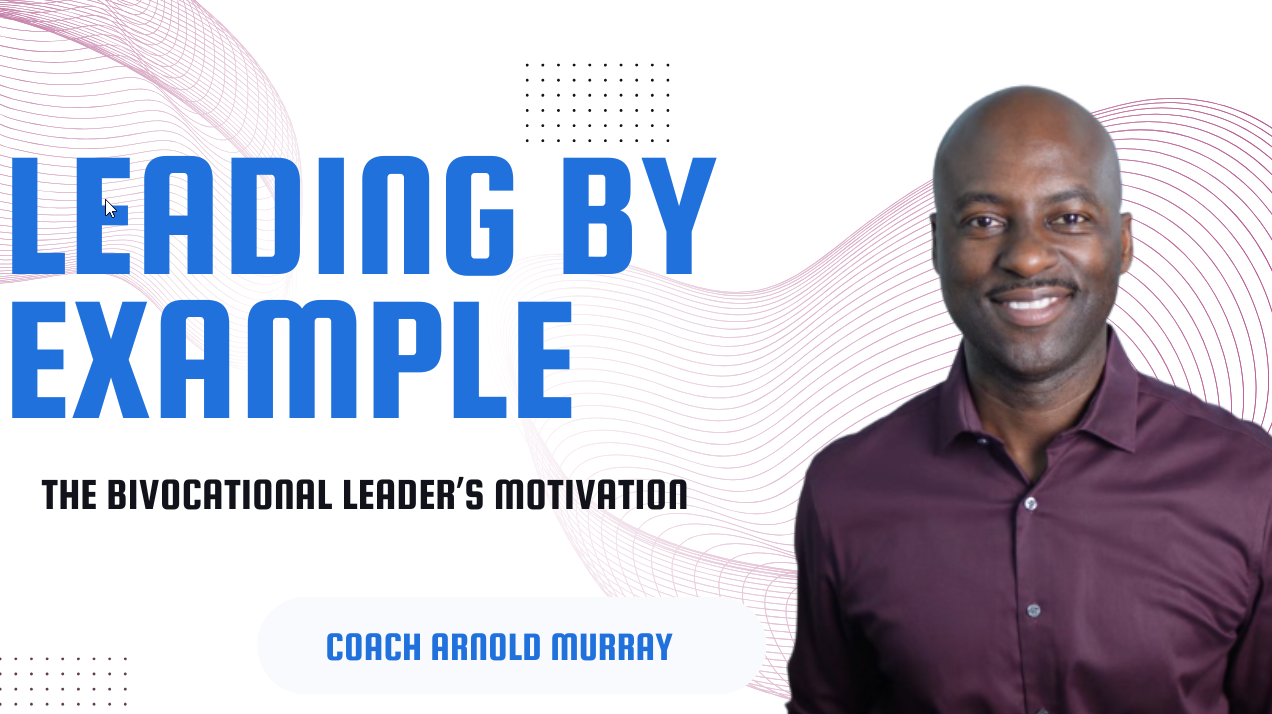
What drives your professional leadership? As a leader, the motivation behind your leadership will show up in everything you do. It shows up in your communication, decision-making, and your leadership strategy. High performing team members often end up following a leader's example rather than just their words. Why is that? It’s because they are attracted to something deeper than skill or strategy. These professionals are attracted to personal transformation. When you embrace personal transformation, your words and actions will match. You are able to maintain authentic leadership in everything you do. But for bivocational leaders, this raises a critical question: How do you sustain this kind of authentic leadership when you carry significant responsibility in different areas? How do you drive this type of leadership? The answer is “leading by example.” Bivocational leaders (BVLs) walk a unique path. BVLs are people who feel called to operate at high levels in both their professional career and their spiritual calling. One of the most fascinating things I’ve noticed is how so many bivocational leaders have the same motivation for their leadership. They want to be an example. They don't just want to lead with words. They want to embody transformation. They are not interested in controlling others. They want to master themselves. In the marketplace, competition is often framed as a battle for dominance. The expectation is to win at all costs, to outshine and outmaneuver others. But BVLs see competition through a different lens. Winning is mastering yourself. The real competition isn’t external. It’s within you: The doubts that tell you, “You’re not good enough.” The fears that whisper, “You don’t have what it takes.” The limiting beliefs that keep you stuck. As a bivocational leader, you are called to dominate in the areas where you have complete control. You have complete control over your words, your actions, and your mindset. Once you embrace this dominion, your leadership becomes a living example of what is possible. While dominating internal battles forms the foundation of bivocational leadership, it's through intentional reflection that these victories become wisdom and lasting transformation. Often, we don’t get the impact we should from our experiences. Many people move from one challenge to the next without pausing to absorb the lessons life is teaching them. But as a BVL, you operate differently. Be intentional about reflecting on your experiences. Take the time to extract wisdom from your journey so you can pass it on to others. By turning personal transformation into shared wisdom, you can lead in a way that is deeply impactful. Don’t just tell people what to do. Show them what’s possible. But you can’t stop there. Reflection alone isn't enough. To truly transform experience into impactful leadership, BVLs must anchor their insights in something deeper—their faith. For a bivocational leader, faith is more than a personal belief. It’s a leadership tool. It fuels decisions, strengthens resilience, and keeps them focused on the bigger picture. Faith needs to be nurtured. That’s why every BVL can benefit from what I call a "Unique Faith Formula." This is a personalized combination of practices that keep you spiritually centered. You fueling practices will be unique to you but may include: Prayer – Simple communication with God. Meditation – Creating space for clarity and insight. Faith Declarations – Speaking life over challenges. Spiritual Study – Deepening understanding and conviction. The strong foundation you develop from fueling your faith naturally leads to perhaps the most distinctive ability. The ability to lead from abundance rather than scarcity. Many leaders operate from stress, burnout, or a need to prove themselves. They lead from a place of depletion. But bivocational leaders take a different approach: They lead from abundance. As you prioritize personal growth and stay connected to your spiritual calling, you won’t be desperate nor feel like an imposter. You will lead from overflow which builds confidence. When you lead from abundance, you create an environment around you where others thrive. People are naturally drawn to you because your leadership operates from a place of peace, wisdom, and genuine purpose. People don’t follow titles. They follow transformation. They trust leaders who have walked the path and emerged stronger. Here are three practical ways to begin leading by examples. Build more self-awareness around areas in your life where you have had personal transformation. Go back through your journals. Ask your friends, mentors, leaders, and current team members where they have seen growth in you. This is any area where they have noticed positive change in you. Revisit and share the stories where you were able to overcome doubt. Rehearse the stories of wisdom you gained from mistakes and victories. Lead by example. Show others through your life that growth is possible. Personal Transformation is Leading By Example Leadership is most powerful when it’s based on personal transformation. As a bivocational leader, your transformation is your testimony. People are drawn to leaders who embody what they preach. Don’t just tell people what’s possible. Show them that the greatest leadership factor is not what you say, it’s who you’ve become. To get coached on this topic, book a session with me.Leading by Example: The Bivocational Leader’s Motivation for Authentic Leadership
Leadership as a Reflection of Who You AreDominate Areas Where You Have Complete Control: Win the Inner Battle
The Power of Reflection: Transforming Experience into WisdomFaith as the Foundation: Leading with Purpose and Conviction
Leading from Abundance, Not Emptiness
Actions You Can Take to Start Leading by Example
To learn more about building your disciplines, watch this video.
