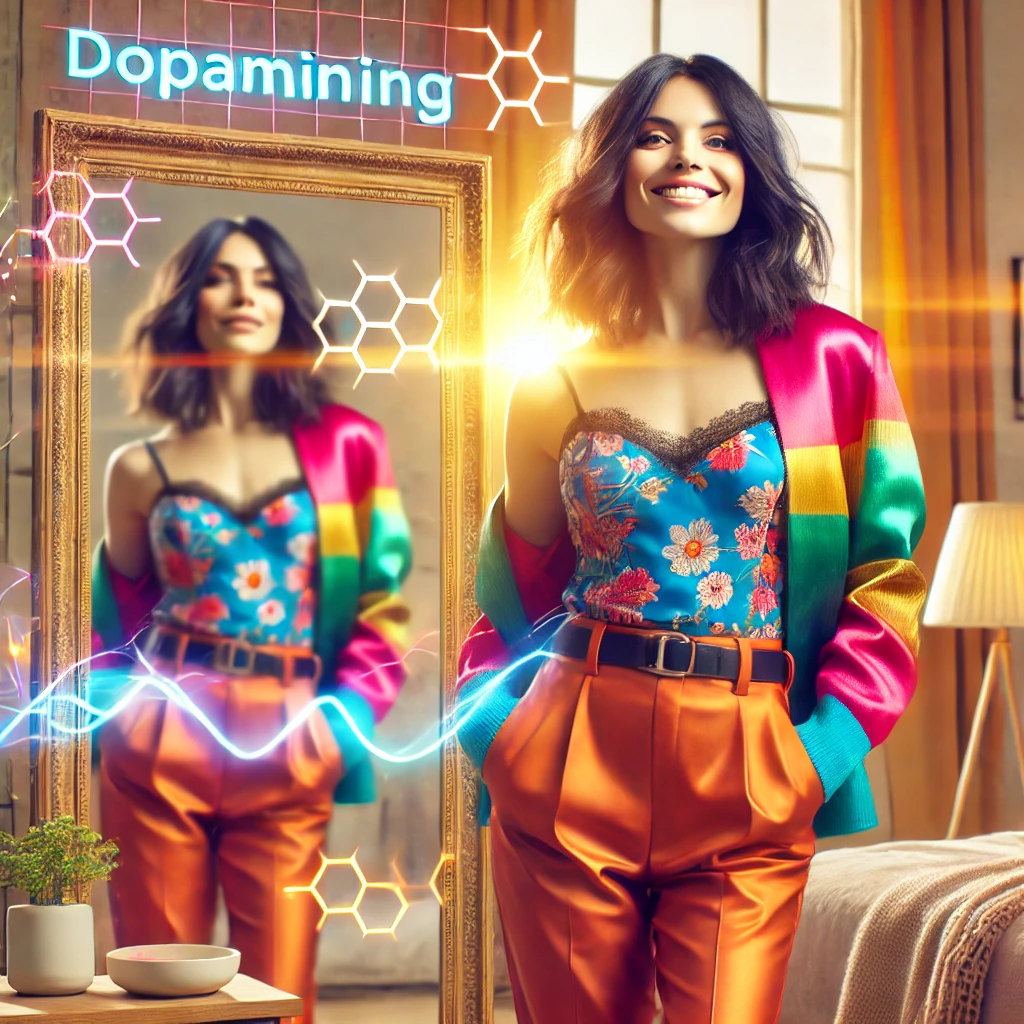
Fashion is often considered a means of self-expression, an avenue to display individuality or keep up with trends. But what if the clothes we wear could also be a tool for mental well-being? Enter dopamine dressing—the idea that what you wear can directly impact how you feel. But dopamine dressing is more than a fun reason to wear bold colors and quirky patterns; it has its basis in psychology, connecting what people wear to mood, confidence, and even motivation.
There are a slew of factors that play a part in mental health, including our thoughts, surroundings and the daily routines we engage in. Science says, when done intentionally, small acts like what we choose to wear can elicit positive emotions. Think about the rush of excitement when you wear an outfit that makes you feel powerful, or the comfort of slipping into a favorite sweater on a tough day. These seemingly small choices play a role in how we navigate our emotions and present ourselves to the world.
But is there real science behind this? Can what we wear genuinely influence brain chemistry? And how can we use aesthetic rituals to enhance our mental well-being? Let’s dive into the fascinating connection between fashion and psychology, and why dressing for joy might be more than just a trend.
The Science Behind Dopamine Dressing
Dopamine is a versatile neurotransmitter playing a critical role in many brain functions, such as movement, memory, motivation, and reward. Commonly described as the “feel-good” hormone, dopamine is a key player in the brain’s reward circuit, promoting behaviors that bring pleasurable experiences or a sense of satisfaction.
The concept of "dopamine dressing" is rooted in the understanding that our choices, including the clothes we wear, can influence our dopamine levels. By selecting an attire that we associate with positive experiences or feelings, we may stimulate dopamine release, leading to enhanced mood and well-being. This practice aligns with principles of color psychology, which studies how different hues can evoke specific emotional responses. For instance, vibrant colors like yellow and pink are often linked to feelings of happiness and energy, while shades of green can have a calming effect. Research from Northwestern University shows that clothing influences cognitive processes and self-perception. Dressing in a way that aligns with your desired state can shift your mindset. This is known as enclothed cognition.
Although there is limited direct scientific evidence linking specific clothing choices to higher dopamine levels, the psychological effects of color and style are well-known. Dopamine dressing can even be considered a form of self-care, empowering individuals to take control of their mood and mental health through intentional fashion choices.
Incorporating Dopamine Dressing into Your Routine
- Start Small: If you are trying bold color for the first time, ease into the trend by introducing bold accessories, such as scarves, bags, or jewelry to your outfits. This way, you can inject valuable pops of color without overwhelming your existing style.
- Embrace Self-Expression: Let your wardrobe be a canvas for your individuality. Whether you prefer clashing patterns, monochromatic brights, or quirky accessories, choose outfits that resonate with your personality and bring you joy.
- Prioritize Comfort and Authenticity: Select clothing that not only looks good but also feels comfortable and true to your personal style. Authenticity in your attire can enhance the positive impact on your mood and overall well-being.
The Role of Aesthetic Rituals
Aesthetic rituals are intentional practices that engage our senses and appreciation of beauty to foster mental well-being. These rituals can range from personal grooming routines to creating harmonious living spaces, all aimed at enhancing our emotional state and overall quality of life.
Engaging with beauty and aesthetics has been shown to positively impact mental health. Incorporating aesthetic elements into daily life can boost self-esteem, reduce anxiety, and improve social interactions. For instance, personal grooming and skincare routines can enhance self-confidence and promote a sense of well-being.
Incorporating Aesthetic Rituals into Daily Life
Integrating aesthetic rituals into your routine doesn't require significant changes; small, intentional actions can make a substantial difference. Here are some suggestions:
- Personal Grooming: Establish a skincare or grooming routine that makes you feel refreshed and confident.
- Mindful Decor: Design your living space with colors and textures that promote calmness and joy. Engaging the senses through mindful decor can enhance comfort and happiness.
- Engage in Creative Activities: Participate in art, music, or other creative endeavors that allow you to express yourself and find joy in the process.
