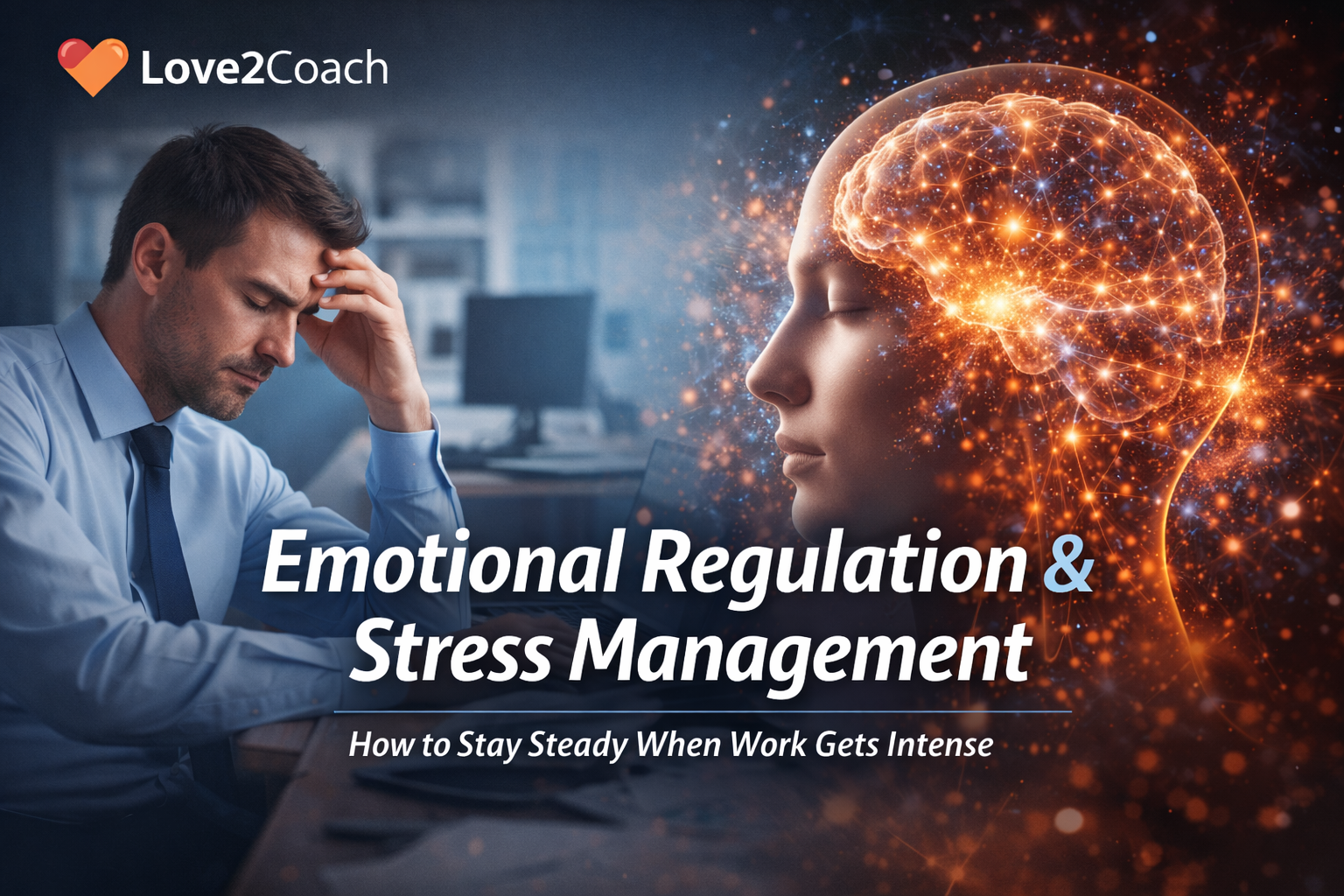
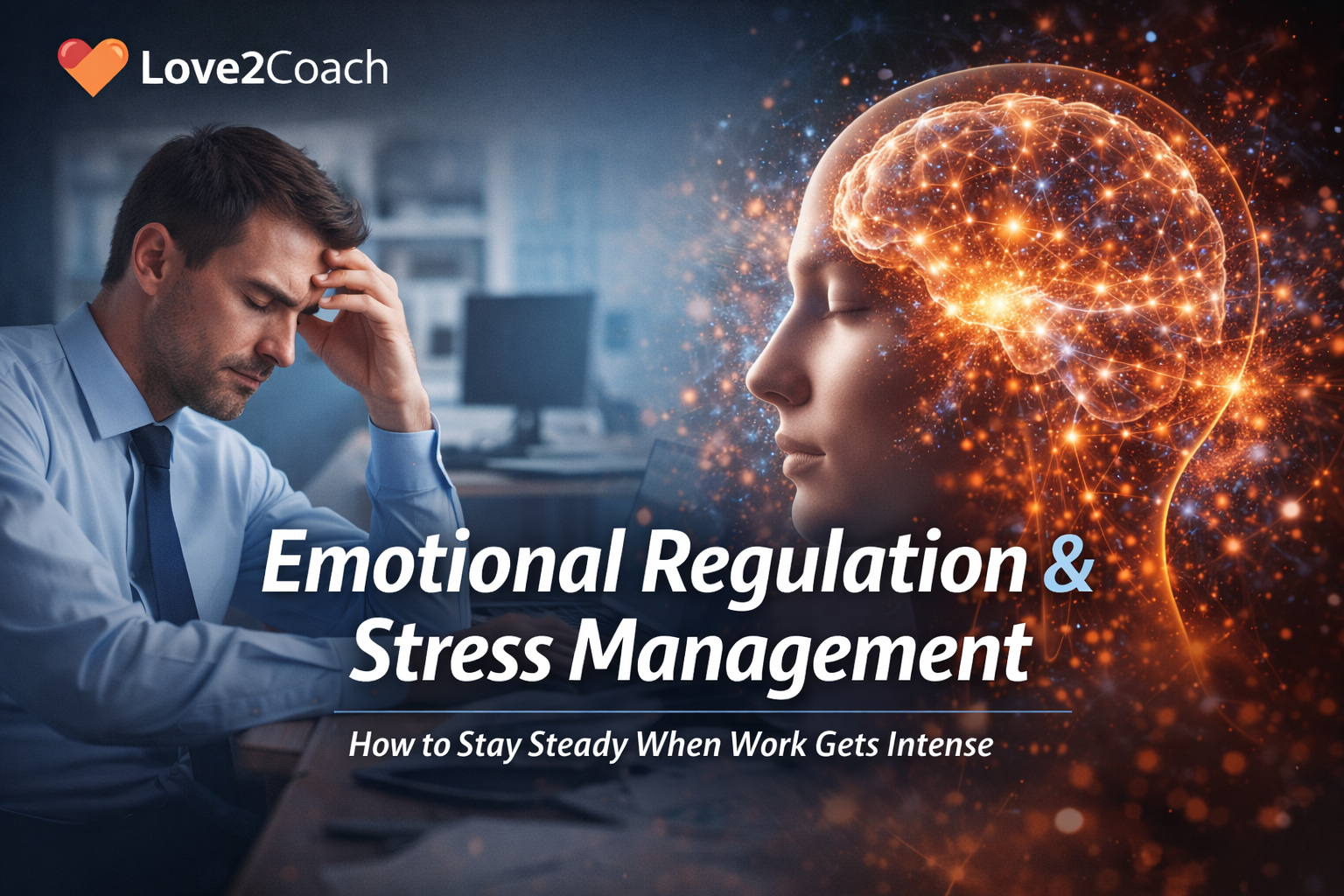
Modern professional life demands constant adaptation. Tight deadlines, complex decisions, and high expectations can create a steady undercurrent of stress. While some pressure is inevitable, chronic stress can quietly erode performance, decision-making, and overall well-being.
Emotional regulation is not about suppressing feelings. It is about understanding how your brain and body respond to stress and learning how to guide that response in a productive direction.
Why Smart Professionals Burn Out
Burnout rarely happens overnight. It develops when stress becomes persistent and unmanaged. When your brain is exposed to prolonged stress, it prioritizes survival over higher-level thinking. This can lead to irritability, mental fatigue, reduced focus, and emotional reactivity.
High-performing professionals are especially vulnerable because they often push themselves to maintain results without pausing to reset. Over time, this imbalance drains emotional energy and reduces resilience.
The good news is that emotional regulation is a trainable skill. By learning to recognize early signs of stress, you can intervene before burnout takes hold.
The Neuroscience of Emotional Control
Your brain constantly scans for threats and rewards. When stress is perceived as overwhelming, the emotional centers of the brain become dominant, making it harder to access calm, rational thinking.
Emotional regulation techniques help restore balance. Practices such as slow breathing, mindful attention, and deliberate pauses activate neural pathways associated with calm and focus. These techniques do not eliminate stress, but they reduce its intensity and help you respond rather than react.
Professionals who manage stress effectively tend to:
Notice their emotional state early
Pause before responding in challenging situations
Use simple physiological tools to reset their nervous system
Reflect on stressful experiences to extract learning
These habits create a buffer between pressure and performance.
Resetting After a Difficult Workday
Stress often accumulates when there is no clear boundary between work and recovery. Without intentional resets, the nervous system remains in a heightened state of alert.
A structured reset routine can help you transition out of work mode. This might include physical movement, journaling, quiet reflection, or a brief period of focused breathing. The goal is to signal to your brain that the immediate demands have passed.
Consistent recovery practices improve emotional stability and make it easier to face the next challenge with clarity.
What Stress Does to Your Performance
Unchecked stress narrows attention and reduces cognitive flexibility. You may find yourself stuck in repetitive thought patterns, reacting impulsively, or struggling to communicate clearly.
In contrast, effective stress management expands your capacity to think strategically and act intentionally. Emotional regulation allows you to stay present in conversations, evaluate options calmly, and maintain professional composure.
This is not about becoming emotionless. It is about developing the ability to experience pressure without being controlled by it.
How Coaching Provides Structure
Many professionals understand the importance of stress management but struggle to apply it consistently. This is where coaching creates a meaningful difference.
Coaching provides a structured framework for developing emotional regulation skills. Through guided reflection, targeted exercises, and accountability, coaching helps you:
Identify personal stress triggers
Build practical regulation strategies
Strengthen resilience under pressure
Develop sustainable habits that support performance
Rather than relying on occasional tips, you build a systematic approach to managing stress and emotions.
A Call to Action
If you recognize that stress is affecting your focus, confidence, or performance, you do not have to navigate it alone. Emotional regulation and stress management are skills that can be developed with the right structure and guidance.
If you are interested in engaging in coaching sessions to strengthen your emotional resilience and perform more effectively under pressure, I invite you to take the next step. Structured coaching can help you build clarity, stability, and confidence in demanding environments.
Your ability to manage stress is not fixed. With deliberate practice and support, you can transform pressure into a source of strength.
