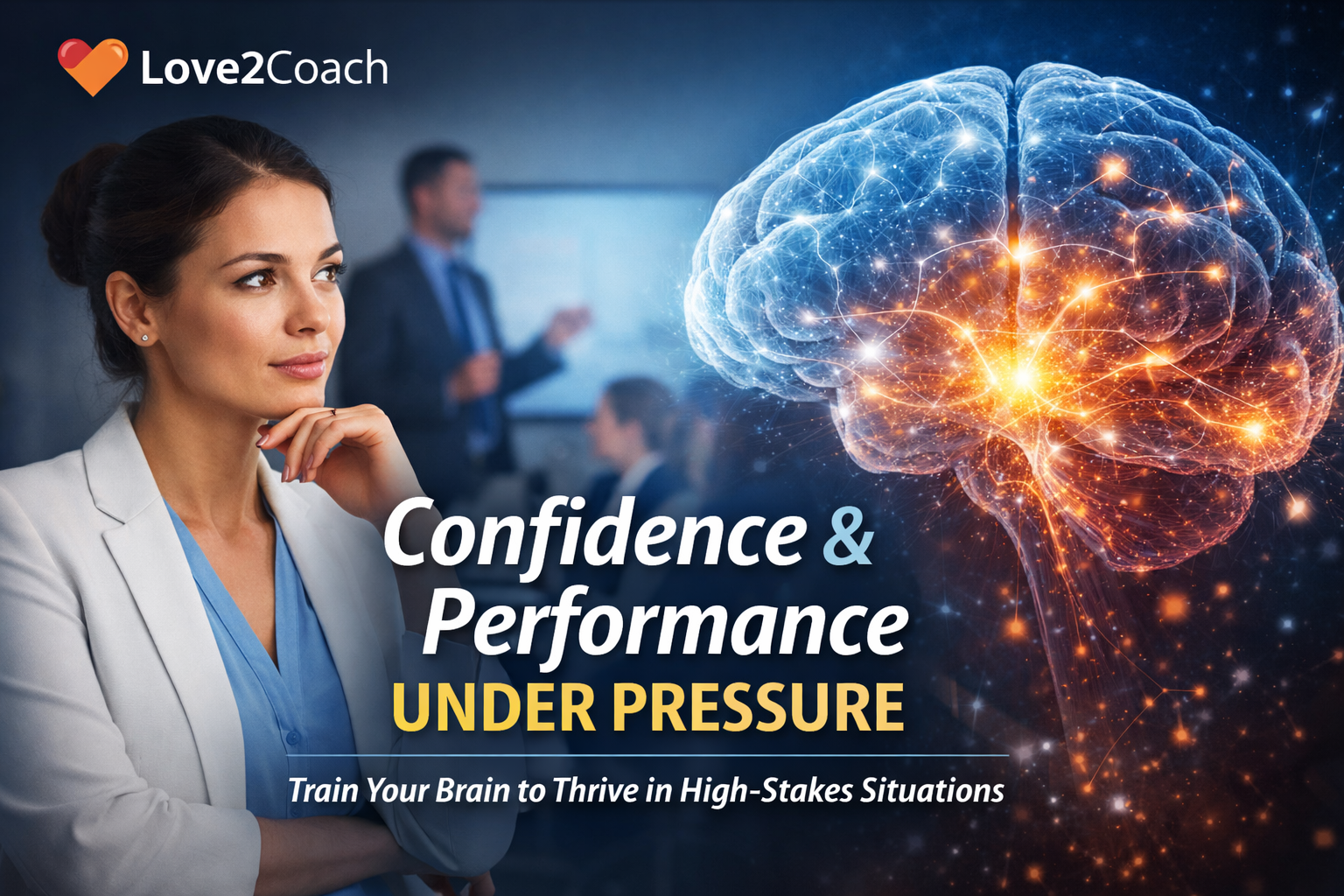
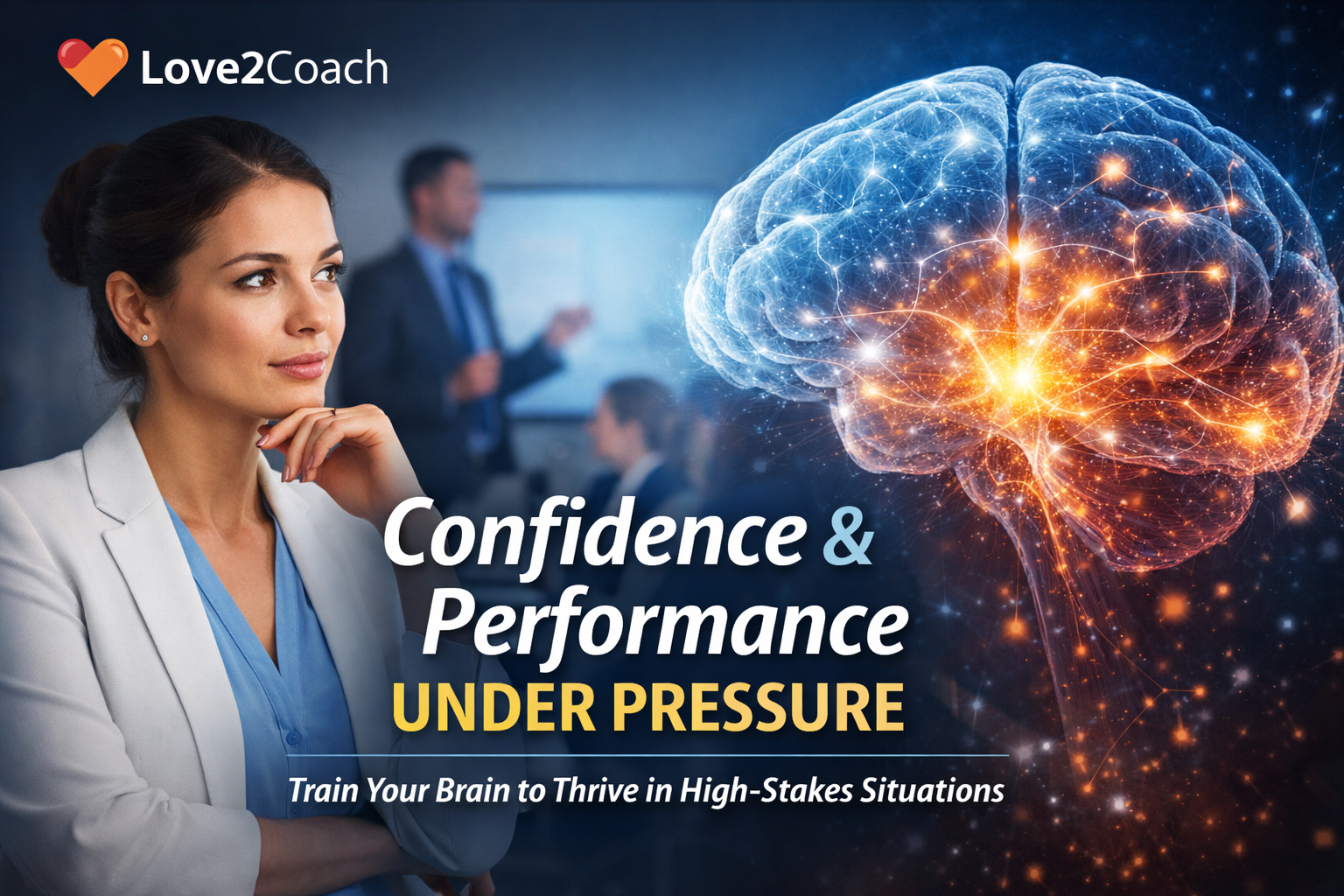
High-pressure situations are part of modern professional life. Presentations, difficult conversations, deadlines, and performance reviews can trigger intense stress — even in highly capable people. Many professionals assume that confidence under pressure is a personality trait you either have or you don’t. In reality, confidence is a skill rooted in how your brain processes stress, and it can be trained.
Understanding this changes everything.
The Pressure–Performance Paradox
Pressure does not automatically harm performance. In fact, a moderate level of pressure can sharpen focus and improve results. The problem occurs when pressure overwhelms your nervous system.
When you perceive a situation as threatening, your brain activates a survival response. Stress hormones like cortisol and adrenaline flood your system. Your heart rate increases, breathing becomes shallow, and your thinking narrows. While this response is useful in physical danger, it can impair decision-making and communication in professional settings.
This is why even competent professionals sometimes “freeze” during important moments. It’s not a lack of ability — it’s a neurological response.
Confidence Is a Regulated State
Confident performance is less about forcing yourself to be brave and more about regulating your internal state. When your nervous system is balanced, the parts of your brain responsible for reasoning, planning, and communication function optimally.
Professionals who perform well under pressure tend to share three habits:
They manage their physiological state. Slow, controlled breathing and posture awareness send calming signals to the brain.
They reframe pressure as a challenge, not a threat. This cognitive shift reduces the intensity of the stress response.
They rely on practiced mental routines. Preparation builds familiarity, which reduces uncertainty.
These habits are trainable. With consistent practice, your brain learns to interpret pressure as manageable rather than overwhelming.
The Role of Self-Talk Under Pressure
Your internal dialogue plays a powerful role in performance. Under stress, many people engage in harsh self-criticism:
“I’m going to mess this up.”
“Everyone will see I’m not good enough.”
This kind of thinking amplifies anxiety and diverts mental resources away from the task. Replacing self-critical thoughts with constructive cues — such as “Focus on the next step” or “Stay present” — helps maintain clarity.
Effective performers do not eliminate nervousness; they channel it. They accept the presence of pressure while directing their attention toward actionable behaviors.
Why Repeated Exposure Builds Confidence
Confidence grows through experience. Each time you navigate a challenging situation successfully, your brain updates its expectations. What once felt threatening becomes familiar.
However, many professionals unintentionally avoid situations that trigger discomfort. While avoidance provides short-term relief, it reinforces the brain’s belief that the situation is dangerous. Gradual, supported exposure to pressure situations is one of the most effective ways to build durable confidence.
This is where structured coaching becomes valuable. A coaching environment provides a safe space to experiment with new strategies, reflect on performance, and build resilience systematically.
Turning Pressure into a Competitive Advantage
The professionals who stand out in demanding environments are not those who never feel pressure. They are the ones who have learned to work with it. They understand their mental patterns, regulate their emotional responses, and approach challenges with deliberate focus.
Pressure, when managed skillfully, becomes a source of energy and engagement. It sharpens attention and elevates performance. The key lies in training your brain to interpret high-stakes moments as opportunities rather than threats.
A Final Thought
If you’ve ever felt that pressure undermines your potential, you are not alone — and you are not stuck with that pattern. Confidence under pressure is a trainable capability grounded in neuroscience and deliberate practice.
With the right tools and guidance, you can develop the ability to stay calm, think clearly, and perform at your best when it matters most.
